The most common mistakes in the theory test (exame de código) are not about the material. They are about reading and method. Many people who fail knew the rule. They read the question too fast, answered by what everyone does on the road, or missed a detail in the picture.
The good news is that these mistakes can be fixed with practice. Below are the eight most frequent, each with an example situation (made up for this article, not taken from the exam) and the rule that settles it.
Reading too fast and missing the word that decides
A theory test question usually has one word that changes everything. In the Portuguese wording, look for não (not), sempre (always), nunca (never), apenas (only), exceto (except), pode (may, can) and deve (must, should). If you skip it, you are answering a different question.
Example. “When approaching a pedestrian crossing with no traffic lights or officer, do you always have to stop?” Someone reading fast sees “crossing” and “stop” and answers yes. But the Highway Code (Código da Estrada) tells you to reduce speed and, if necessary, stop to let pedestrians who have already started crossing get across. The sempre makes the statement false.
The difference between pode and deve matters too. The Code itself uses the two words with different meanings in the same rule: overtaking on the right must (deve) be done in one case and may (pode) be done in another. One is an obligation and the other a possibility.
What to do: read the whole question before you look at the answers. If there is a negation or an absolute word, notice it before you choose.
Answering from habit instead of the law
The exam asks what the Code says, not what you see in the street. Many common habits are simply prohibited.
Example. The traffic light turns green and the car in front does not move off. Can you sound your horn to warn them? No. The horn is only allowed in case of imminent danger. Outside built-up areas (localidades), it can also be used to warn that you are about to overtake, and on bends, crossroads, junctions and crests with poor visibility. Sounding the horn to greet someone or to hurry the driver ahead fits none of these cases.
Another example. “I stop for two minutes on the pavement, with the hazard lights on.” It is common practice, but stopping or parking on pavements is prohibited. Hazard lights do not turn an offence into a permitted manoeuvre.
If the answer that feels right is “what everyone does”, be suspicious and ask yourself what the rule says.
Ignoring the picture
In questions with a picture, the answer is almost always in one detail: which road you are on, which way the sign is facing, whether the other car has a STOP sign in front of it, whether the pedestrian is already on the crossing or still on the pavement.
Example. The picture shows a junction with a STOP sign. If the sign is on your road, you are the one who stops and gives way. If it is on the other car’s road, the obligation is theirs. Answering “I stop” just because you saw a STOP in the picture is a mistake of distraction.
What to do: before you read the answers, place yourself in the picture. Which is your vehicle, which road are you on and which signs face you. Only then read the options.
-
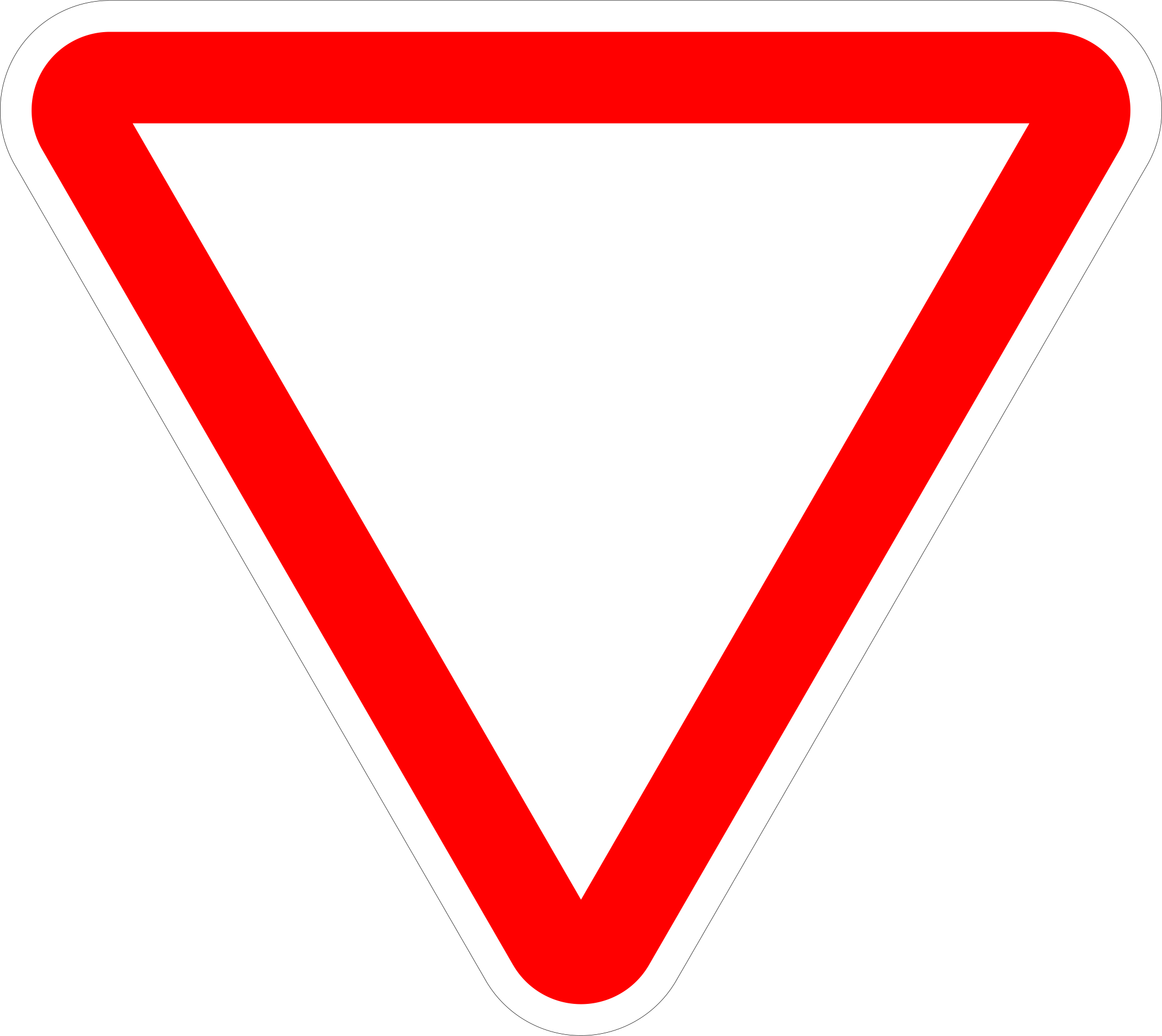 B1 Cedência de passagem
-
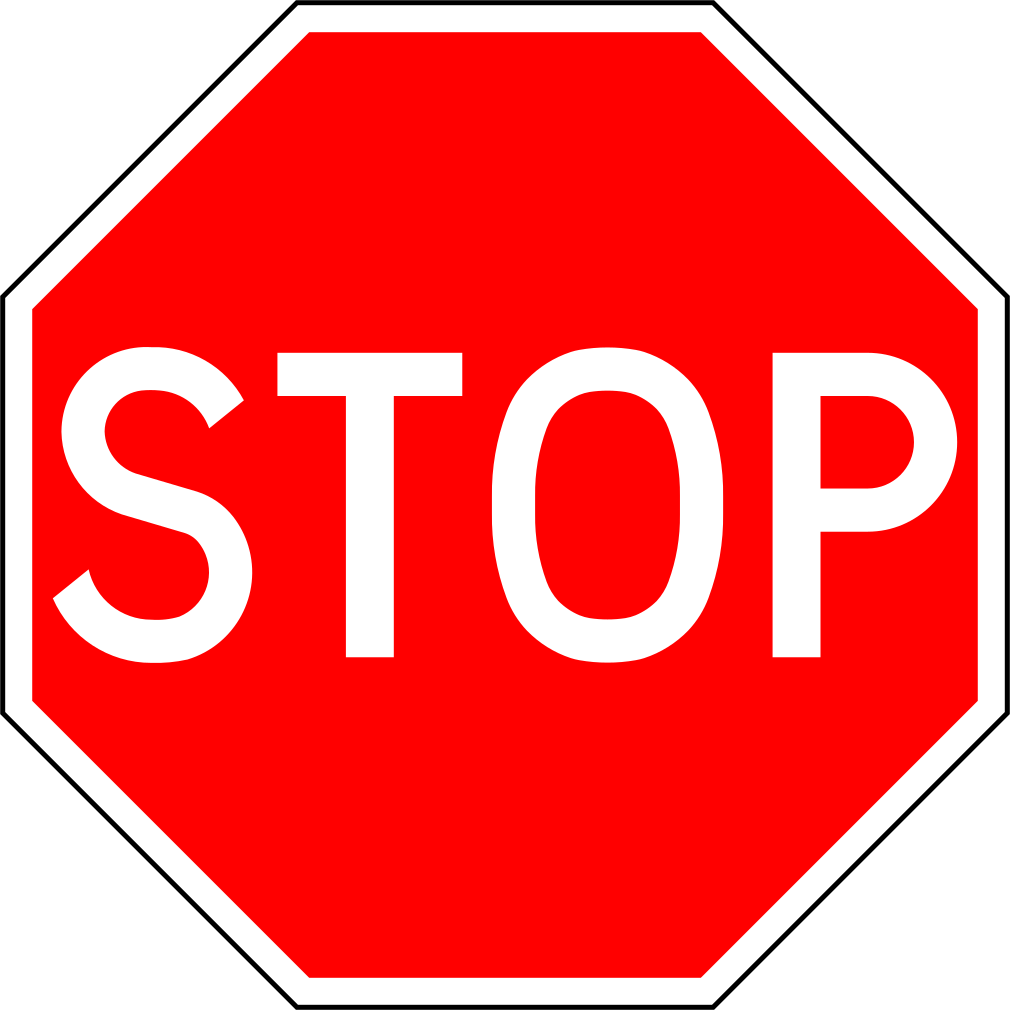 B2 Paragem obrigatória no cruzamento ou entroncamento
Confusing stopping with parking
Many people use “stop” and “park” as synonyms. In the exam they are not, and there are places where you may stop but not park.
The Highway Code defines both:
- Stopping (paragem): immobilising the vehicle only for as long as it takes passengers to get in or out, or for a quick loading or unloading, with the driver ready to drive off.
- Parking (estacionamento): any other immobilisation that is not caused by traffic itself, with or without occupants.
Example. You drop a friend at the pharmacy door and stay at the wheel, waiting while she shops. Because you are still in the car, it looks like stopping, but it is not. Letting her out is stopping. Waiting is parking, because you are no longer just letting a passenger out.
This topic comes up a lot in the stopping and parking questions (in Portuguese), and the answer almost always depends on this distinction.
Not knowing who rules when the instructions disagree
Sometimes, in the same situation, there is an officer, a traffic light, a sign and a general rule, and each seems to say something different. The Code has a fixed order for these cases:
- Instructions from the officer directing traffic.
- Temporary signs that change the normal regime of the road (roadworks, for example).
- Variable-message signs (the electronic panels).
- Light signals (traffic lights).
- Vertical signs.
- Road markings.
- General traffic rules.
Example. The traffic light is green, but an officer signals you to stop. You stop, because the officer’s instruction prevails over signs and rules.
The same reasoning settles many right-of-way questions. The general rule is to give way to whoever comes from your right. But signs prevail over rules. If you have a priority road sign and the car on your right has a give way sign, you go first. If you are unsure about this part, the giving way chapter (in Portuguese) explains it calmly.
Treating general rules as if they had no exceptions
Anyone who memorises only the general rule falls for the questions about exceptions.
Example 1: priority to the right. You are driving along a street and a car comes out of a petrol station on your right. It comes from the right, but it has no priority. Anyone leaving a car park, a fuel station or a private road must always give way. The same goes for anyone joining a roundabout, or a motorway via the access slip road.
Example 2: overtaking on the right. The general rule is to overtake on the left. But if the car in front has signalled that it will turn left and has left the right-hand side of the road clear, overtaking is done on the right.
The same happens on a one-way road when the car in front is going to stop or park on the left. Trams can also be overtaken on the right, under certain conditions.
When you study a rule, always ask: “are there cases where this does not apply?” If there are, they are likely to come up in the exam.
Mixing up the distances
Distances are easy to confuse, because several look alike. Instead of memorising them one by one, group them. These are all in the Highway Code:
| Situation | Distance |
|---|---|
| No stopping or parking before a pedestrian crossing | less than 5 m before it (and on it) |
| No stopping or parking near crossroads, junctions and roundabouts, inside built-up areas | less than 5 m on each side |
| The same, outside built-up areas (includes bends and crests with poor visibility) | less than 50 m on each side |
| No stopping or parking near a bus stop | less than 5 m ahead of and 25 m behind the sign |
| No parking near a level crossing | less than 10 m on each side |
| Side distance when overtaking a cyclist or passing a pedestrian on the verge | at least 1.5 m, slowing down |
Notice a detail that often catches people out. Near level crossings, the rule prohibits parking. Inside the level crossing itself, both stopping and parking are prohibited. Here the difference between stopping and parking counts again.
Five metres is the “town” measure: pedestrian crossing, junction, ahead of the bus stop sign. Behind the bus stop it is much more (25 m), because the bus needs room to pull in. Outside built-up areas, near junctions and bends, the distance rises to 50 m.
Changing answers because of nerves
This is a very frequent method mistake. You answer and, shortly afterwards, you start doubting and want to change.
The first answer, when it was thought through, usually comes from the rule you studied. The second, given under pressure, usually comes from fear.
Change an answer only when you have a concrete reason: a word you misread, a detail in the picture you had not seen, a rule you remembered afterwards. “I am not sure any more” is not enough of a reason.
It also helps not to get stuck on one question. If one blocks you, answer with the best reasoning you have and move on. Spending a long time on a single question takes away the calm you need for the next ones.
How to practise so you do not fall into these mistakes
Doing lots of tests helps, but only if you look at each mistake and understand where it came from. When you get a question wrong, ask yourself what went wrong:
- Reading: did I miss a word?
- Habit: did I answer by what people do rather than by what the law says?
- Picture: did I miss a detail?
- Material: did I not know the rule, or only know the general rule without the exceptions?
Each type of mistake is fixed in a different way. The first three are solved with attention and method. The last one asks you to go back to the material.
If your doubts are about signs that look almost the same, read the article on Portuguese road signs that look alike. For concrete situations that tend to confuse, topic by topic, see the hard questions in the Portuguese theory test explained.