Many road signs differ only in one stroke, one colour or the shape of the plate. That is where marks are lost in the theory test (exame de código) and offences are committed on the road.
To avoid mixing them up, look first at the shape and the colour, which tell you what kind of order it is, and only then at the drawing. Below are the nine pairs and trios that confuse people most, with the detail that separates them and what changes in practice.
Before the pairs: the shape tells you the type of sign
In the signs in this article you will always see the same pattern:
- Triangle with a red border and the point upwards: danger. It is the shape that the Road Signs Regulation (Regulamento de Sinalização do Trânsito, RST), the law that defines the signs, sets for danger signs. It is also used for some give way signs, such as B8.
- Circle with red: prohibition.
- White circle crossed with black stripes: end of a prohibition.
- Blue circle: obligation.
- Blue square: information or advice.
Parking prohibited or stopping and parking prohibited
-
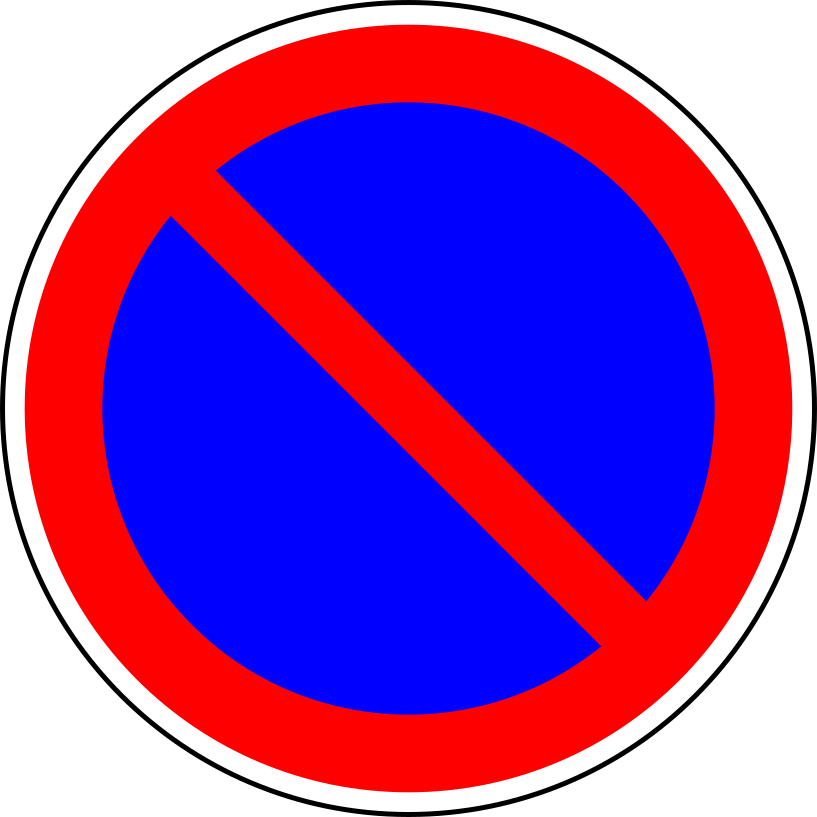 C15 Estacionamento proibido
-
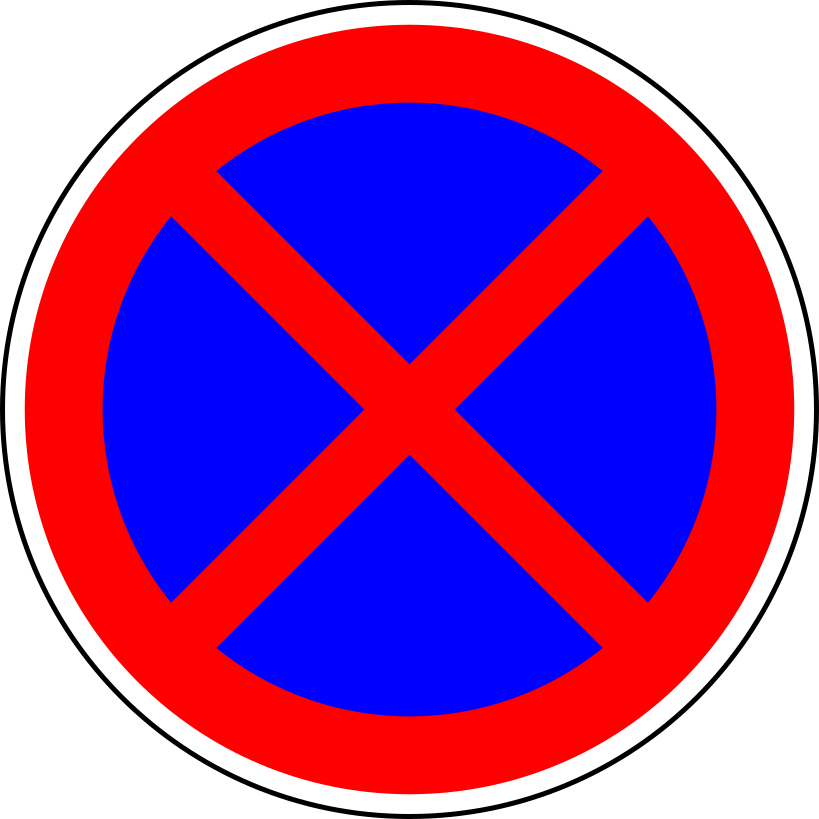 C16 Paragem e estacionamento proibidos
-
 C21 Fim de paragem ou estacionamento proibidos
The first two have a blue background and a red border. What distinguishes them is what is inside: C15 has one diagonal stroke and C16 has two, crossed in an X.
- C15, estacionamento proibido (parking prohibited): you may not park, but you may stop. Stopping, for the Highway Code, means immobilising the car only for as long as it takes someone to get in or out, or for a quick loading or unloading, with you ready to drive off.
- C16, paragem e estacionamento proibidos (stopping and parking prohibited): not even that.
You go to pick up a friend at her door and the street has C15? You can stop while she gets in the car. If you get out to ring her doorbell, you are no longer ready to drive off and it becomes parking. Both prohibitions end with the same sign, C21.
Give way or STOP
-
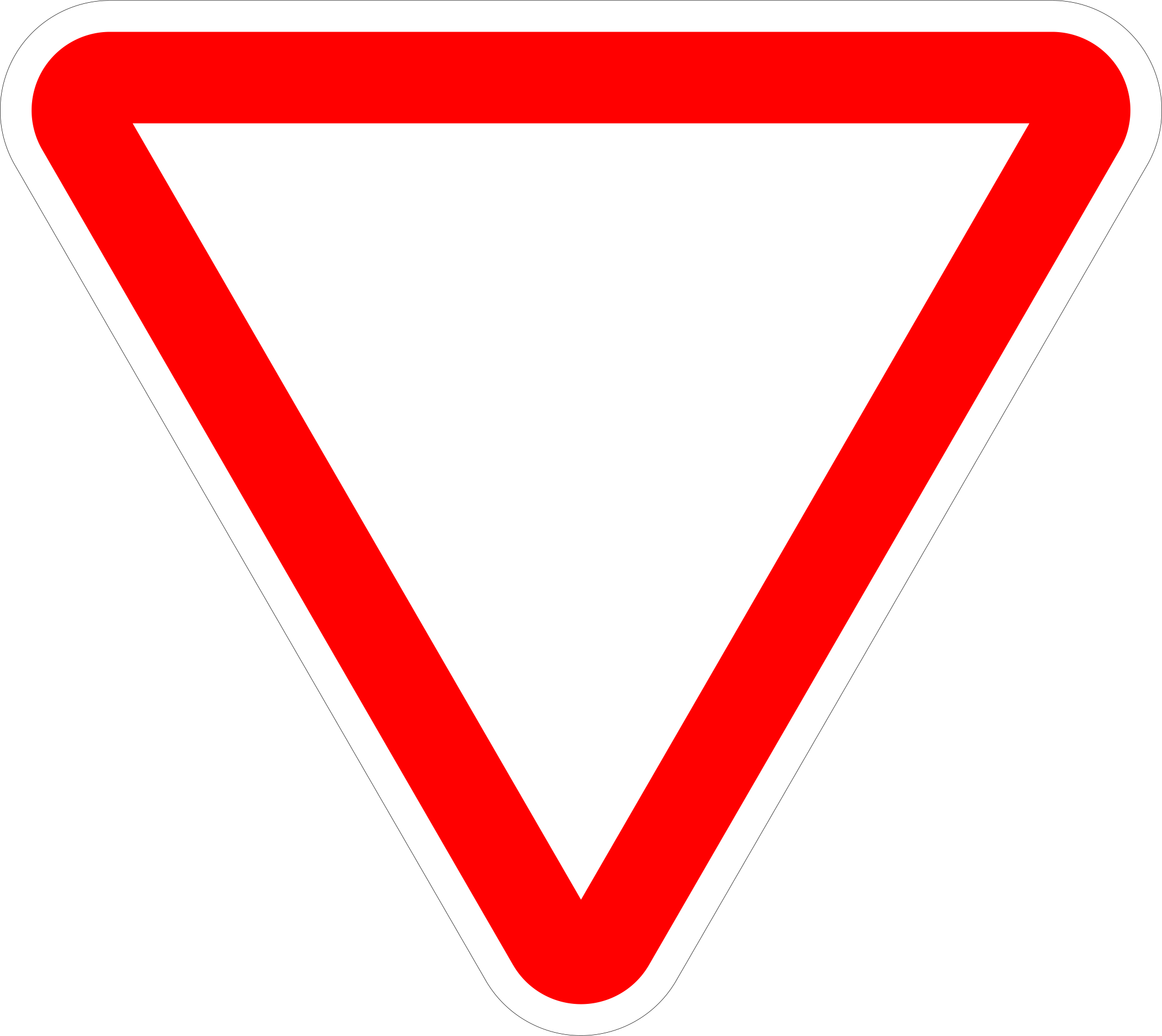 B1 Cedência de passagem
-
 B2 Paragem obrigatória no cruzamento ou entroncamento
B1 is a red-bordered triangle with the point downwards, the only triangle like that. B2 is the red octagon with the word STOP.
- B1, cedência de passagem (give way): you give way to those on the road you are about to enter. You slow down and, if necessary, stop. If the road is clear, you carry on.
- B2: you must stop before entering the crossroads or junction, even if nobody is coming, and only then move off, giving way.
A STOP can be announced in advance by a B1 with a panel underneath that reads “STOP” and the distance. That triangle does not tell you to stop there: it warns you that further ahead you will have to stop.
Priority road or end of priority road
-
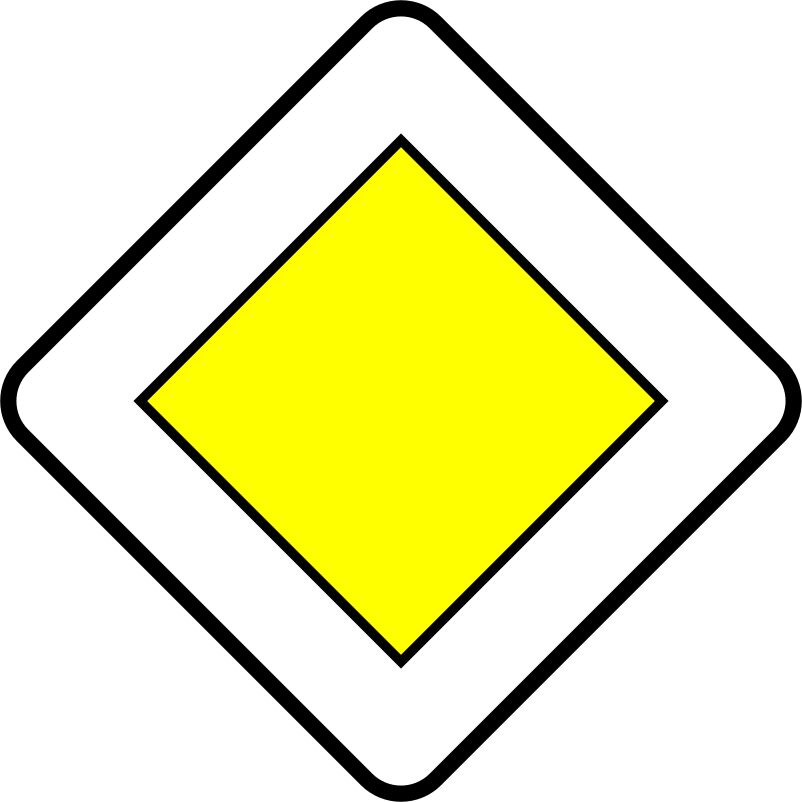 B3 Via com prioridade
-
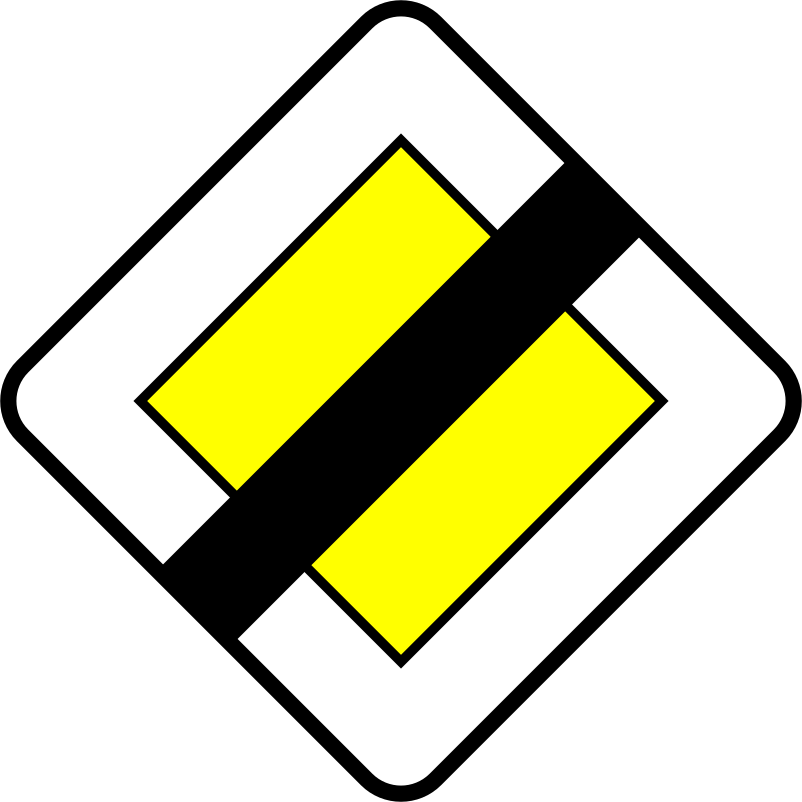 B4 Fim de via com prioridade
Both are yellow diamonds with a white border. B4 has a black diagonal stripe across it.
- B3, via com prioridade (priority road): whoever is on that road has priority at the following crossroads and junctions. It can only be used when the roads that cross it are marked with give way or STOP.
- B4, fim de via com prioridade (end of priority road): from there the road no longer has priority. If there are no other signs, the general rule of the Highway Code returns: you give way to whoever approaches from your right.
Even with priority, you must take the necessary precautions.
Crossroads with priority to the right or crossroads with a road without priority
-
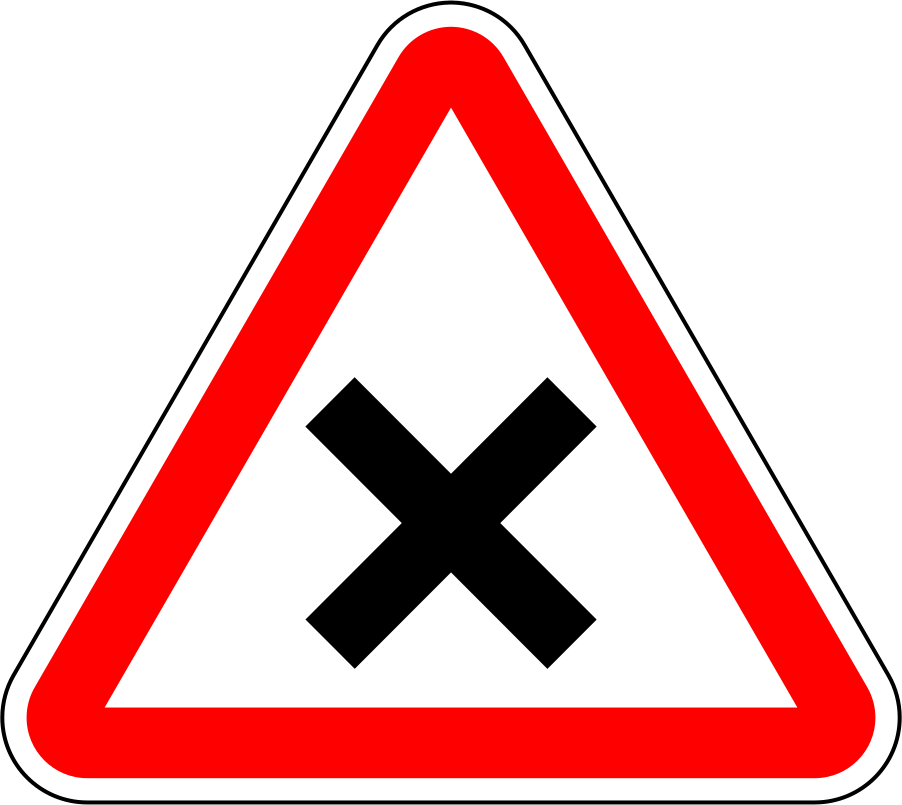 A24 Cruzamento ou entroncamento
-
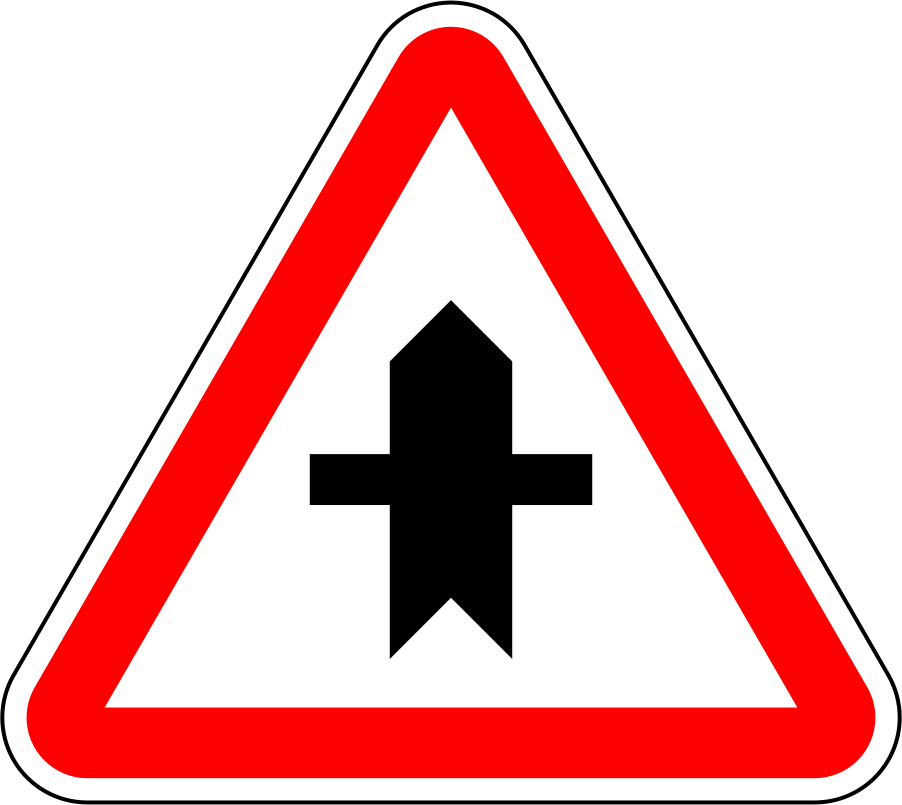 B8 Cruzamento com via sem prioridade
Both are red-bordered triangles and both warn that a crossroads is coming. But only A24 is a danger sign: B8 is a give way sign. It is the drawing that changes.
- A24, cruzamento ou entroncamento (crossroads or junction): a black X, with both arms equal. Neither road has priority: priority to the right applies. Inside built-up areas (localidades), the RST only allows it in exceptional cases.
- B8, cruzamento com via sem prioridade (crossroads with a road without priority): a cross in which the vertical stroke, your road, is much thicker than the horizontal one. Those coming from the side roads give way to you.
Both usually appear between 150 and 300 metres before the crossroads, in time for you to see whether you will have to give way.
No entry or no vehicles
-
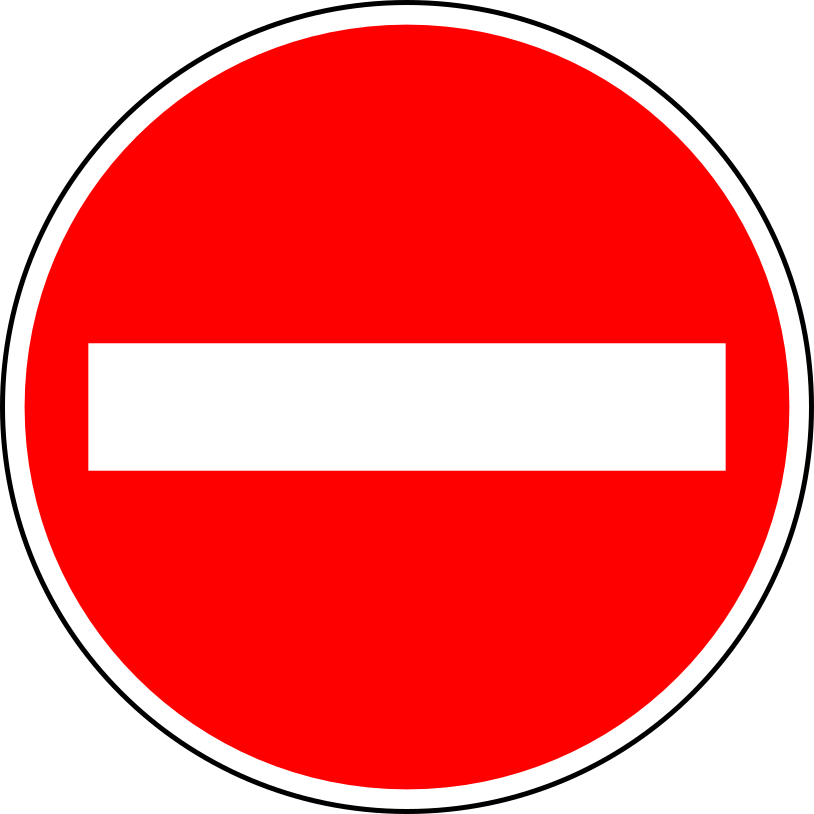 C1 Sentido proibido
-
 C2 Trânsito proibido
- C1, sentido proibido (no entry): a solid red disc with a white horizontal bar. It prohibits entering in the direction the sign is facing. It is what you see when you reach the end of a one-way street from the wrong side. Whoever comes from inside the street drives normally.
- C2, trânsito proibido (no vehicles): a white disc, empty, with only the red border. It prohibits driving in both directions.
In a street with C1 you may see cars coming out towards you. In a street with C2 nobody enters from either end. If there is an additional panel underneath, read it, because it says to whom or at what times the sign applies.
Maximum, minimum or recommended speed
-
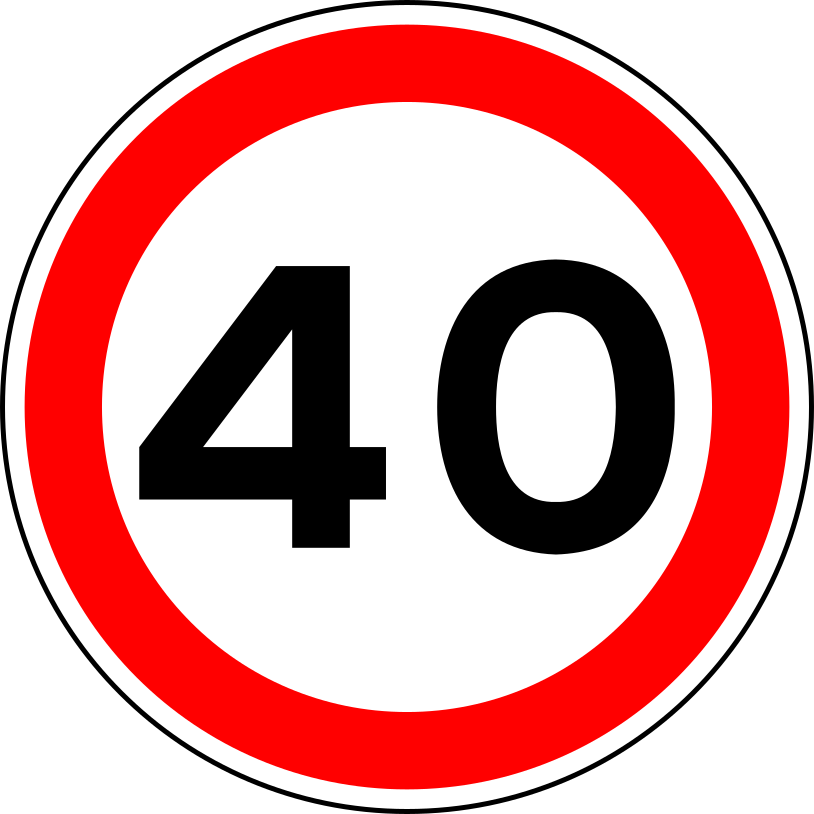 C13-40 Proibição de exceder a velocidade máxima de 40 km/h
-
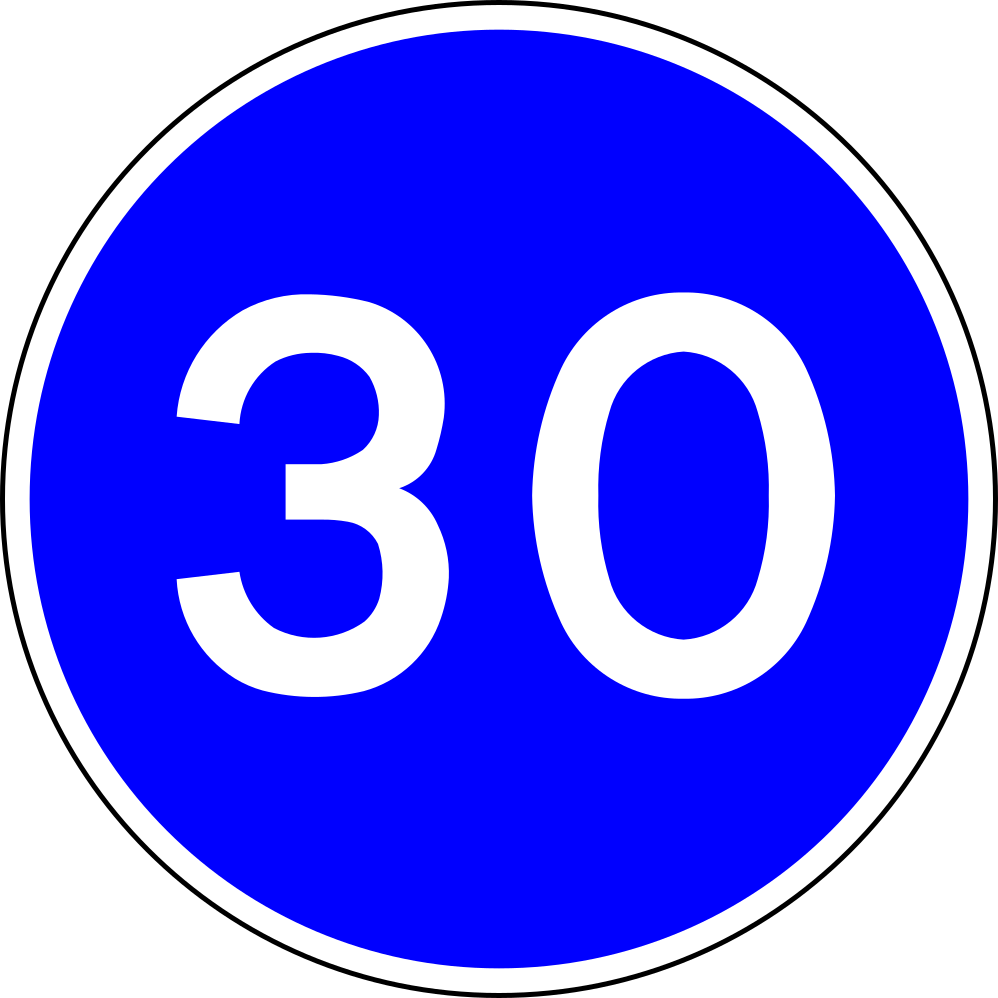 D8-30 Obrigação de transitar à velocidade mínima de 30 km/h
-
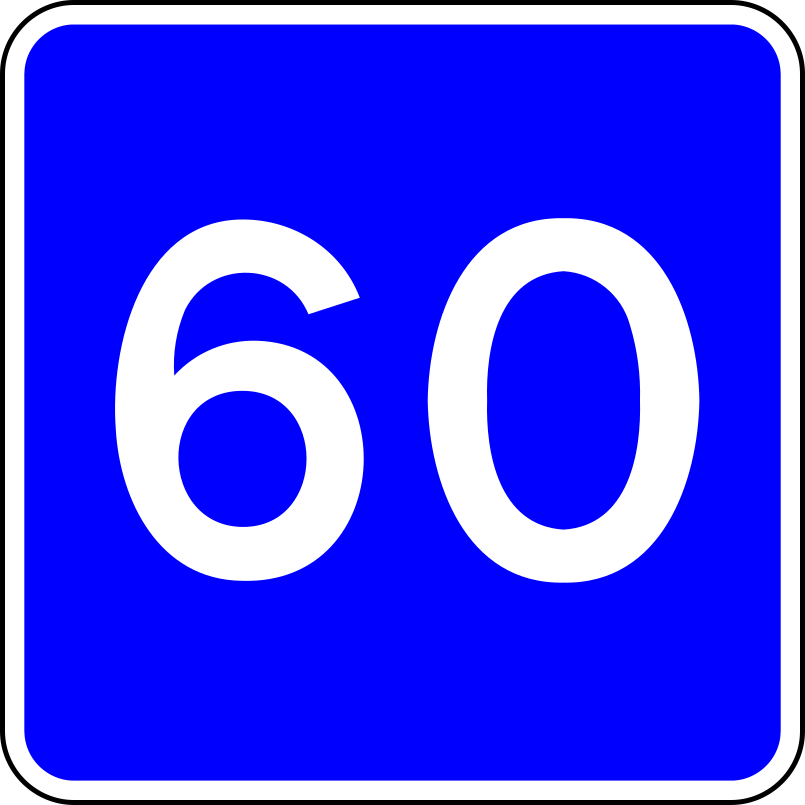 H6-60 Velocidade recomendada
Here the number misleads. What decides is the shape and the colour:
- C13 (white circle with a red border, black number): maximum speed. You may not go above the number shown.
- D8 (blue circle, white number): compulsory minimum speed. You may not go below the number shown.
- H6 (blue square, white number): recommended speed. It is the maximum speed at which you are advised to drive, not an order.
The recommended speed is not a free pass. The Highway Code always obliges you to adjust your speed so that you can stop within the clear and visible space ahead of you.
-
 C20b-40 Fim da limitação de velocidade
-
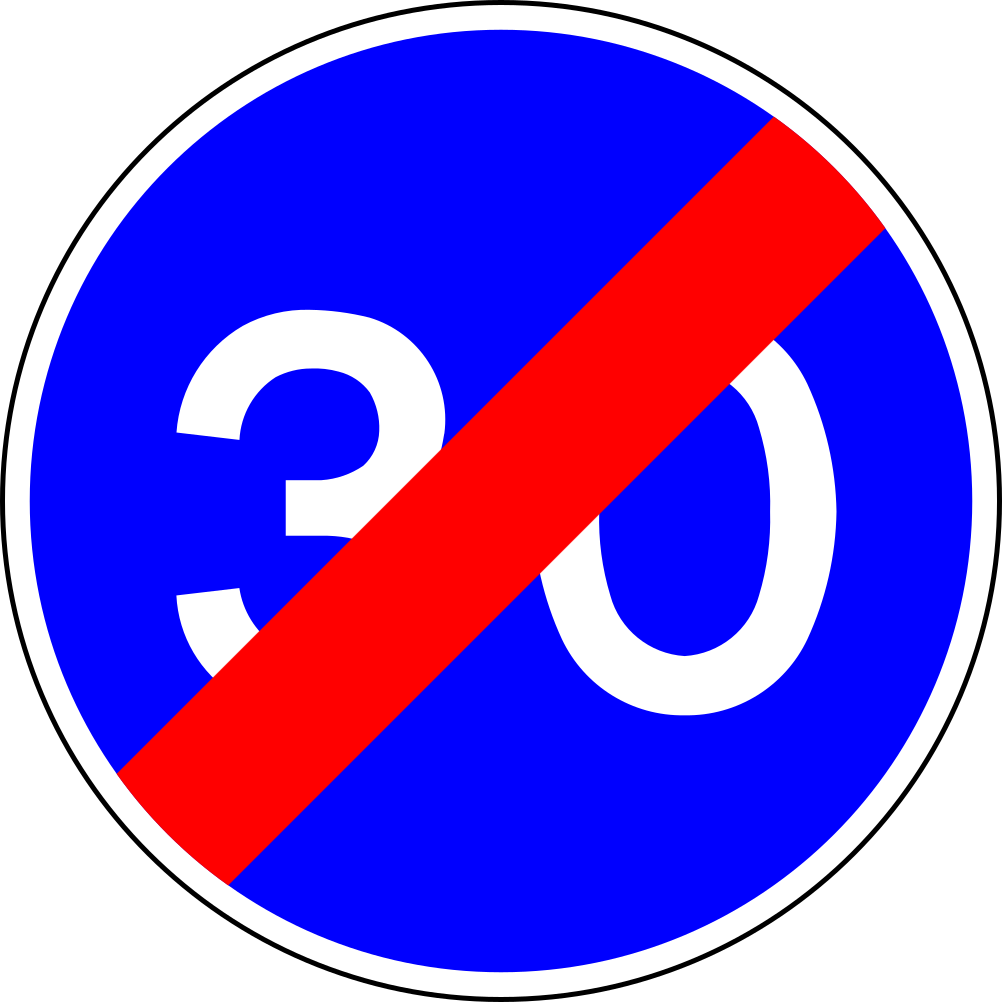 D14-30 Fim da obrigação de transitar à velocidade mínima de 30 km/h
-
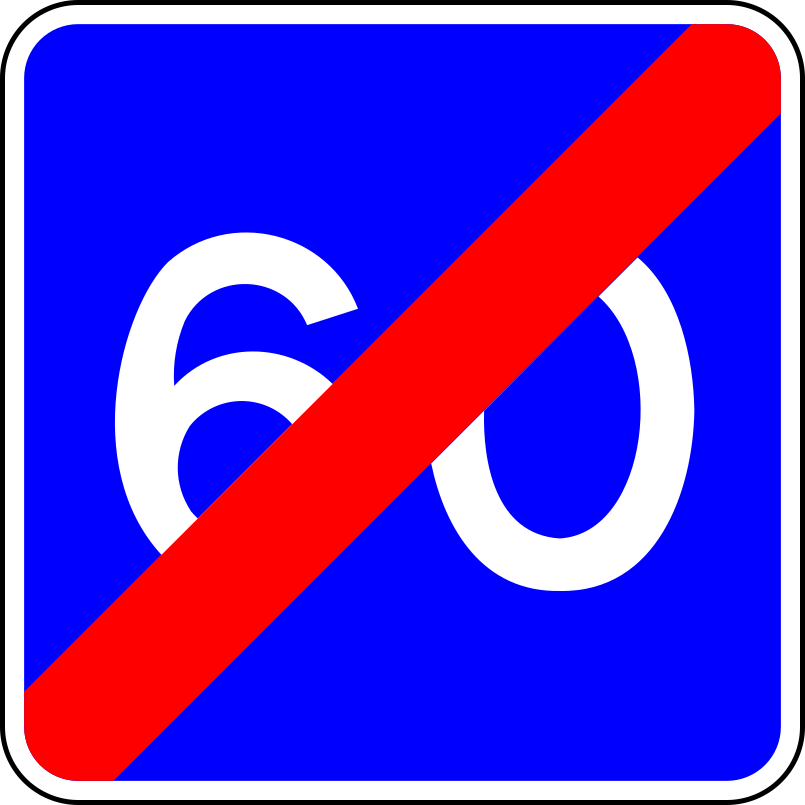 H37 Fim de velocidade recomendada
No overtaking and the two end signs
-
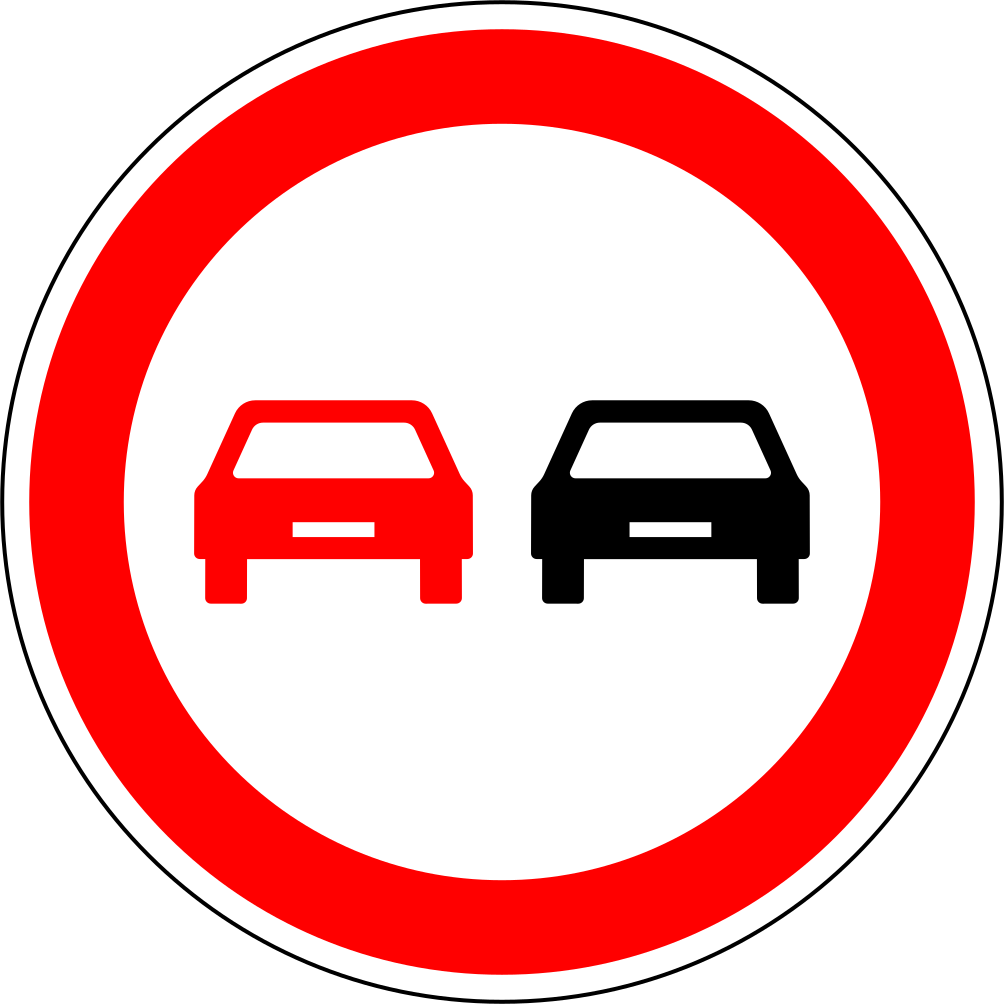 C14a Proibição de ultrapassar
-
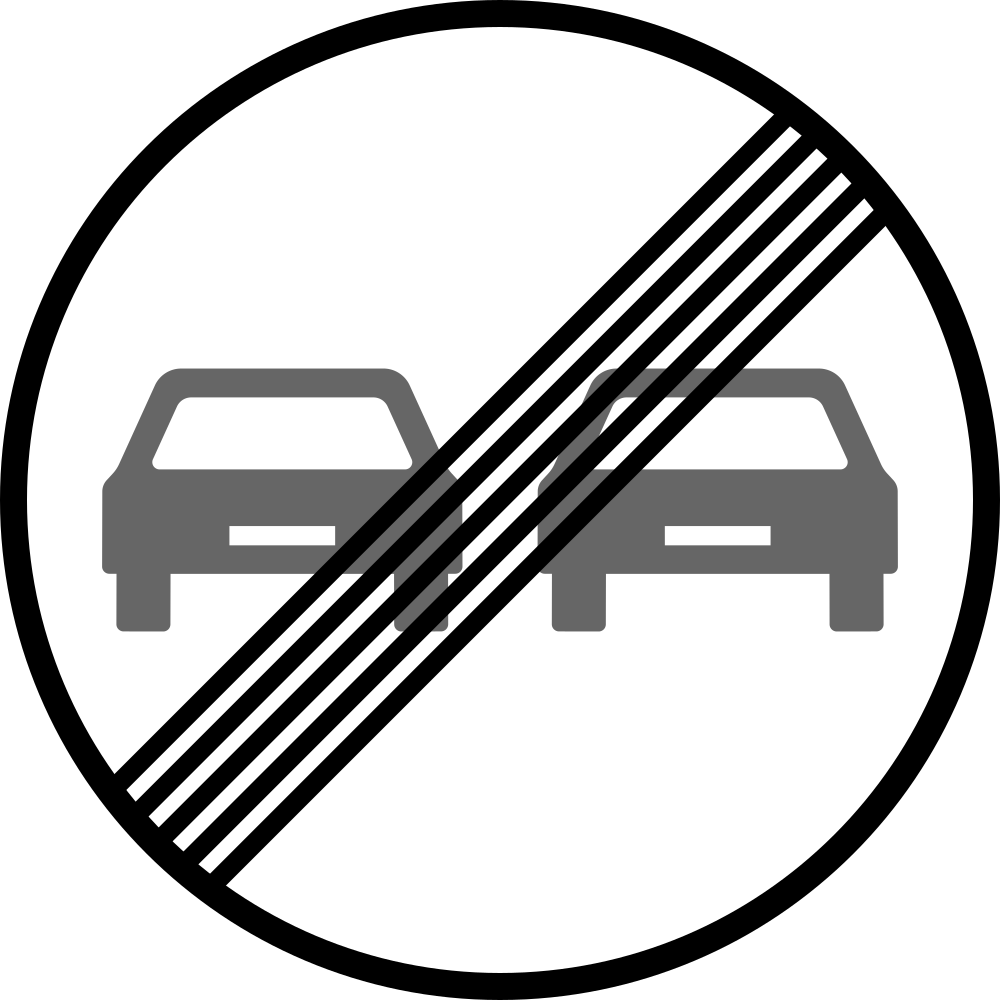 C20c Fim da proibição de ultrapassar
-
 C20a Fim de todas as proibições impostas anteriormente por sinalização a veículos em marcha
- C14a, proibição de ultrapassar (no overtaking): two cars side by side, the left one red. It prohibits overtaking other vehicles, except cycles (such as bicycles), two-wheeled mopeds and two-wheeled motorcycles without a sidecar. So you may overtake a bicycle, with due care.
- C20c, fim da proibição de ultrapassar (end of the overtaking prohibition): the same cars in grey, crossed by black stripes. It ends only the C14a prohibition.
- C20a, fim de todas as proibições (end of all prohibitions): a white disc with only the stripes. It ends all the prohibitions imposed by signs on moving vehicles, such as speed limits and overtaking prohibitions.
Parking is not a “moving vehicle”, so the end of the stopping and parking prohibitions has its own sign, C21.
Be careful with the “end” too. After C20c the general prohibitions of the Code still apply: overtaking on crests, on bends with reduced visibility, before and at crossroads, or before and at pedestrian crossings.
Compulsory direction or one-way traffic
-
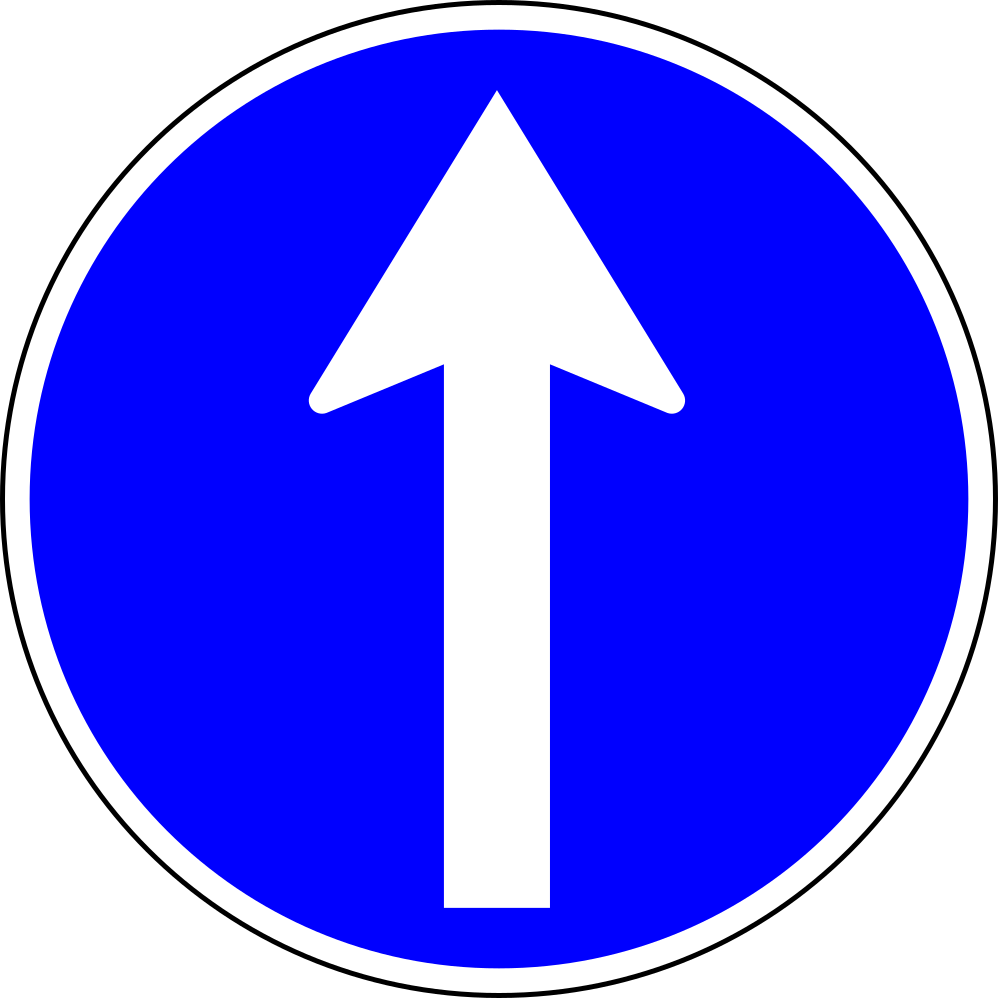 D1c Sentido obrigatório
-
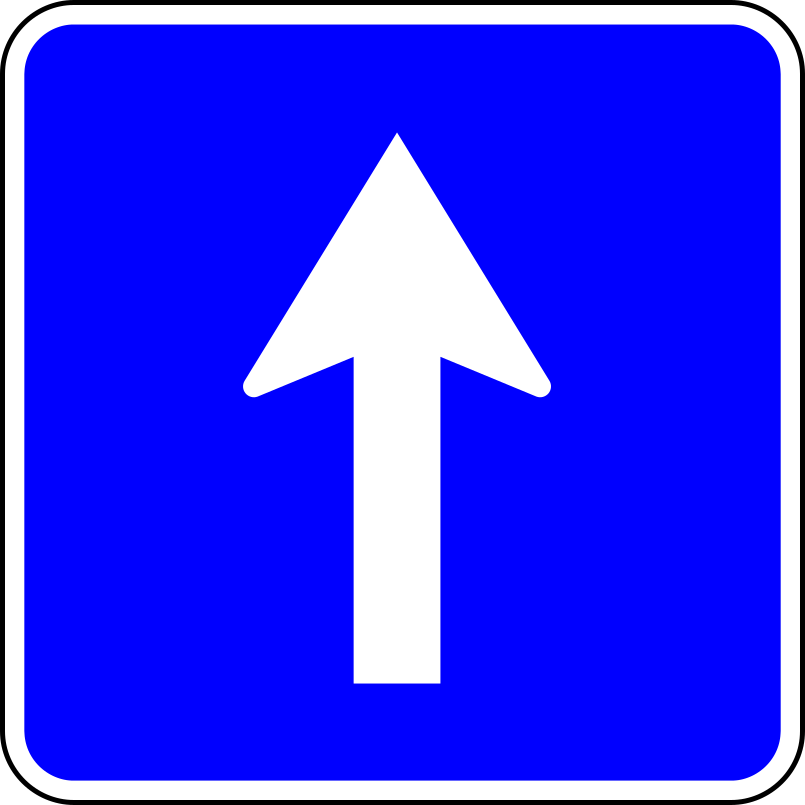 H3 Trânsito de sentido único
- D1c, sentido obrigatório (compulsory direction): a blue circle with a white arrow. It obliges you to follow the direction of the arrow at the next intersection. With the arrow pointing up, you cannot turn at that crossroads.
- H3, trânsito de sentido único (one-way traffic): a blue square with a white arrow. It informs you that the road only has traffic in that direction. It can also mark the end of a stretch with traffic in both directions.
H3 tells you that you will not meet cars head-on and that nobody can drive along that street in the opposite direction, you included. It does not prohibit you from turning further ahead. D1c does impose the direction at the next crossroads.
Pedestrian crossing: danger warning or indication
-
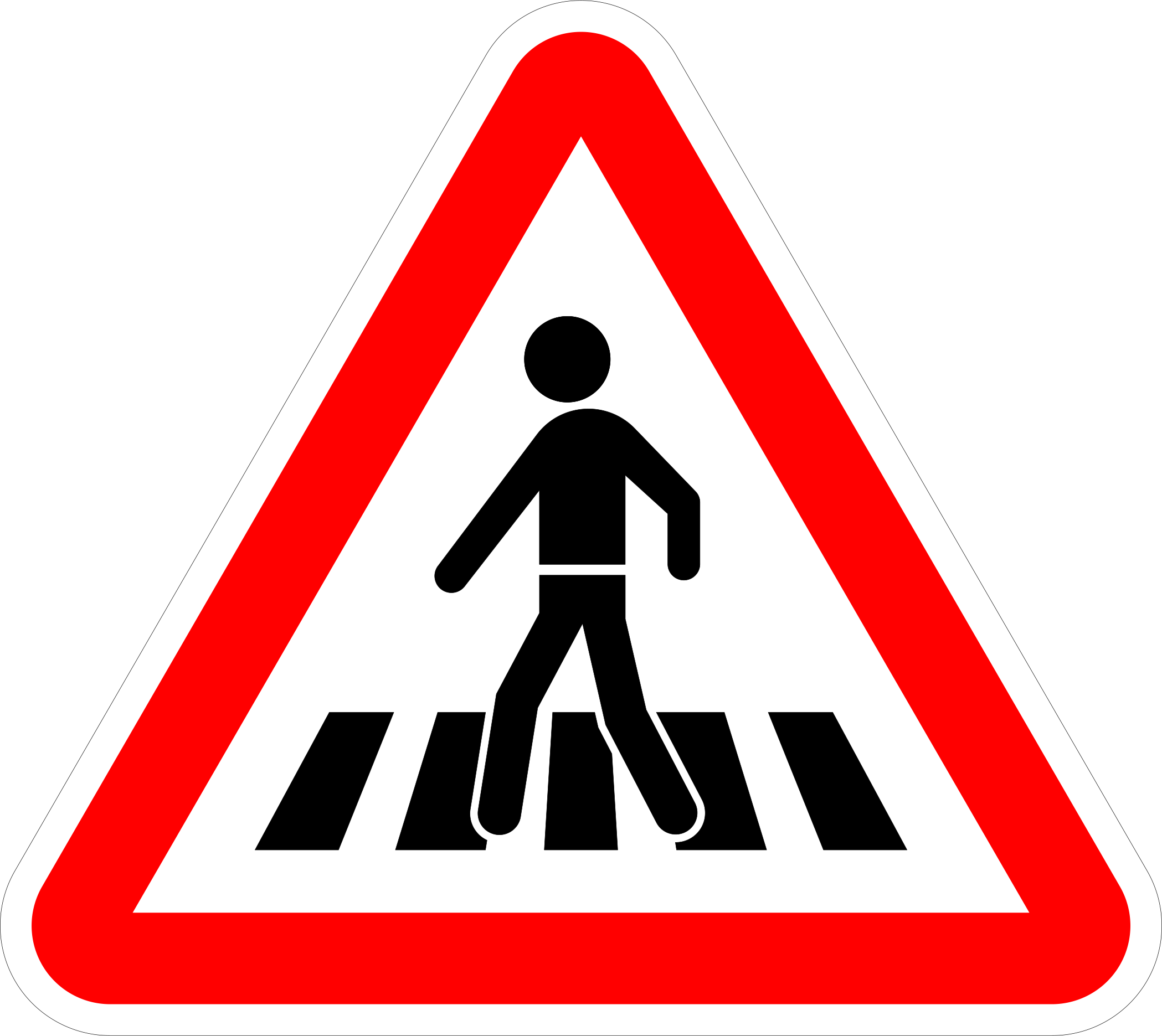 A16a Passagem para peões
-
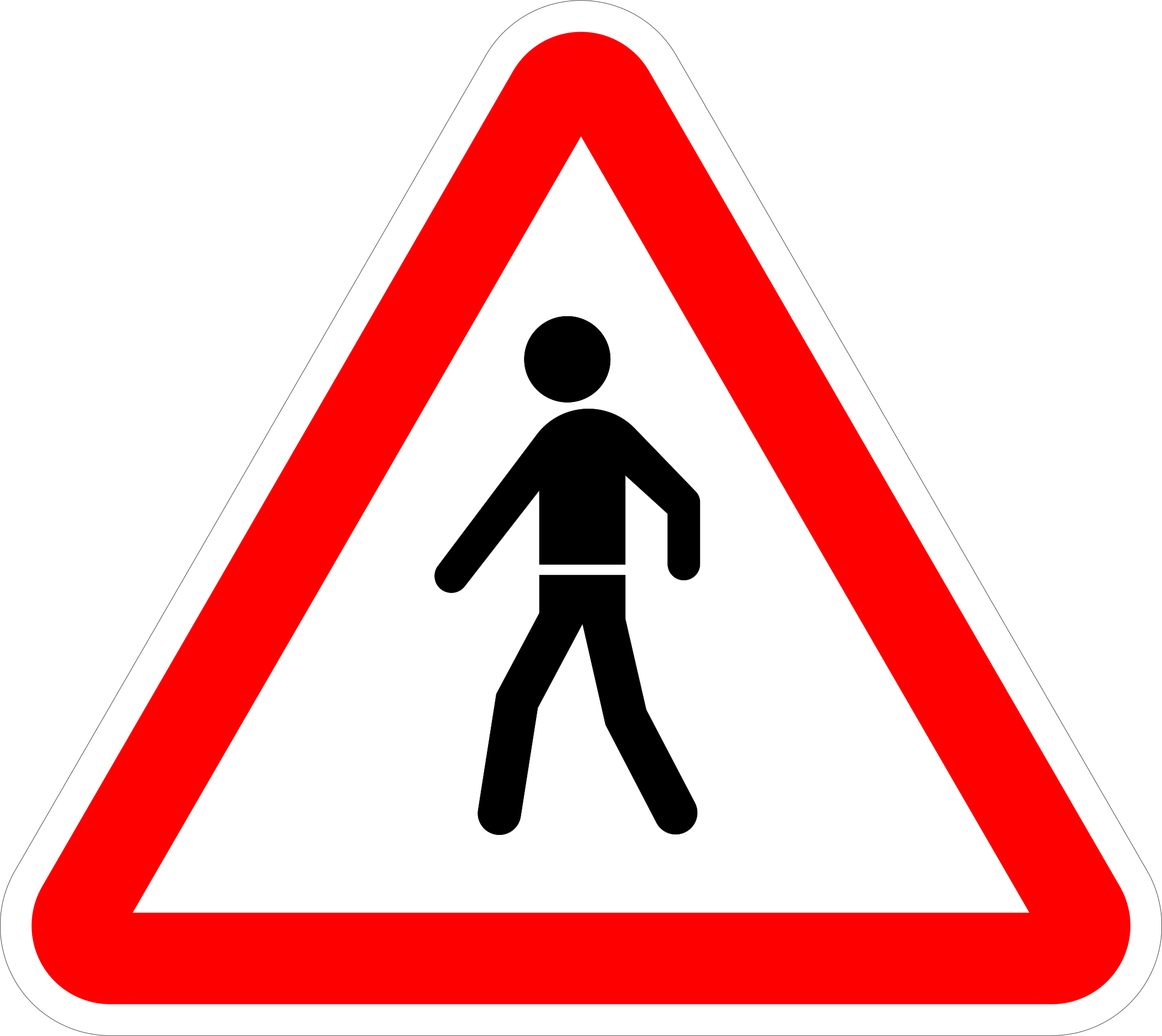 A16b Travessia de peões
-
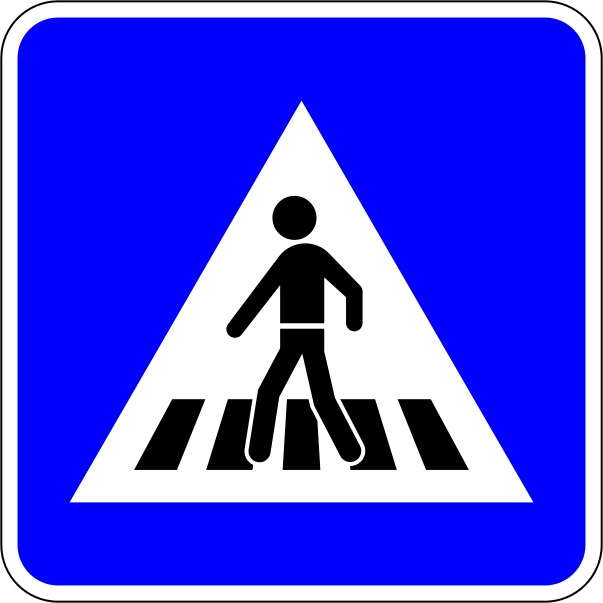 H7 Passagem para peões
All three have a pedestrian, but they say different things:
- A16a, passagem para peões (pedestrian crossing): a danger triangle with the pedestrian on the stripes of a crossing. It warns that you are approaching one.
- A16b, travessia de peões (pedestrians crossing): a triangle with the pedestrian without a crossing. It warns that pedestrians may appear crossing along that stretch. Pedestrians may cross outside the crossing when there is none within 50 metres.
- H7, passagem para peões (pedestrian crossing): a blue square with a white triangle inside. It marks the exact location of the crossing.
What you do is the same in all three cases: you slow down. At a pedestrian crossing with no traffic light or officer, you reduce speed and, if necessary, stop to let pedestrians who have already started crossing get across.
You may not overtake immediately before the crossing or on it, nor stop or park less than 5 metres before it.
Study the signs in pairs, side by side, and say aloud the detail that separates them: “one stroke, two strokes”, “triangle or square”, “circle or blue square”. The Via Rápida sign catalogue (in Portuguese) shows each family together, which helps with this comparison.
To see where these confusions appear in the exam, also read the common mistakes in the Portuguese theory test and the hard questions explained by topic.